Podcast: Play in new window | Download | Embed
Peter’s Bookends to the Church Age: Acts 2, Joel’s Prophecy, and the Day of the Lord
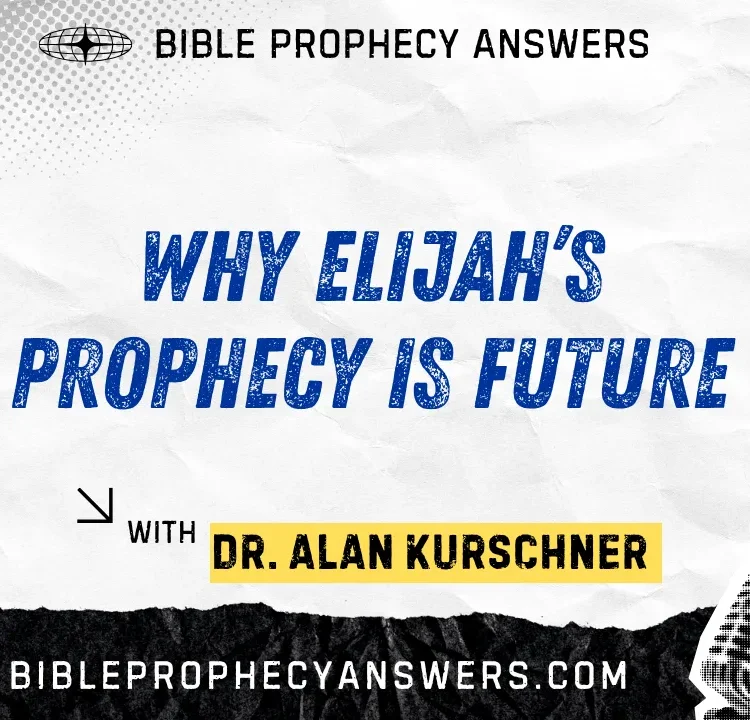
In session 4 of 6, “Church Age Bookends: Pentecost to Portents,” Dr. Alan Kurschner delivered this talk at the conference, The Celestial Disturbances. Dr. Kurschner examines Peter’s use of Joel’s prophecy in Acts 2 and explains why it matters for understanding the church age, the celestial disturbances, the Day of the Lord, and the timing of the rapture. Building on the biblical pattern from Joel, Matthew 24, Luke 21, and Acts 2, this teaching argues that the cosmic signs of the sun, moon, and heavens are not random prophetic details—they function as a major time indicator in end-time prophecy.
What Did Peter Mean in Acts 2?
At Pentecost, Peter quotes the prophet Joel to explain the outpouring of the Holy Spirit. The Spirit’s coming marks the beginning of a new era—the last days. But Peter’s quotation does not stop with dreams, visions, prophecy, and the pouring out of the Spirit. It also includes wonders in the heavens, blood, fire, columns of smoke, the sun turning dark, and the moon turning to blood before the great and glorious Day of the Lord.
This raises an important question: Were the celestial disturbances fulfilled at Pentecost, at the cross, or do they still await future fulfillment?
Why Joel’s Prophecy Was Not Completely Fulfilled at Pentecost
This video explains why the first part of Joel’s prophecy began to be fulfilled at Pentecost through the outpouring of the Spirit, while the second part—the celestial disturbances—remains future. Peter does not describe the sun going dark, the moon turning to blood, or the Day of the Lord’s judgment occurring on Pentecost. Instead, Acts 2 presents an inaugurated fulfillment: the prophecy begins with Pentecost and will be completed at the end of the age.
Why This Challenges the Pretribulational Rapture View
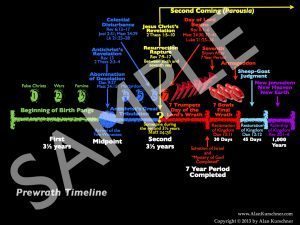
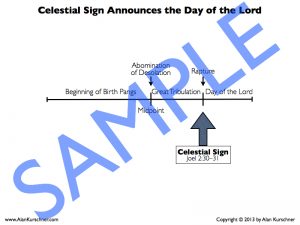
A major focus of this teaching is how Peter’s quotation of Joel creates a problem for the claim that the church age ends before Daniel’s seventieth week begins. If the church age begins at Pentecost and concludes with the celestial disturbances, then the church remains present until that future cosmic-sign event. Since those signs occur after the midpoint of Daniel’s seventieth week and after the Great Tribulation begins, this means the church will face the persecution of the Antichrist rather than being raptured before it.
The Church Age Has Two Prophetic Bookends
Alan argues that Peter presents Joel’s prophecy as two bookends to the church age. The first bookend is Pentecost, where the Spirit is poured out and the last days begin. The second bookend is the future celestial disturbances, which announce the Day of the Lord, the return of Christ, deliverance for the saints, and judgment for the wicked.
Why Eschatology Matters
This session also stresses the practical importance of end-time teaching. Jesus warned his people ahead of time, and Revelation warns against taking the mark of the beast. If believers wrongly assume these warnings are not for the church, they may be spiritually unprepared for the Great Tribulation. Theology matters because preparation matters.
Watch this session to learn:
How Acts 2 interprets Joel’s prophecy, why the celestial disturbances are still future, why Pentecost began the last days, how Peter’s “bookends” frame the church age, and why this challenges pretribulationism while supporting a prewrath understanding of the rapture and the Day of the Lord.
![Antichrist Before the Day of the Lord: What Every Christian Needs to Know about the Return of Christ [Paperback]](https://www.alankurschner.com/wp-content/uploads/2013/11/Prewrath-3D-Cropped-e1406256638580-218x300.jpg)
![Prewrath: A Very Short Introduction to the Great Tribulation, Rapture, and Day of the Lord [Paperback]](https://www.alankurschner.com/wp-content/uploads/2015/08/Prewrath-very-short-introduction-cover-682x1024-200x300.jpg)