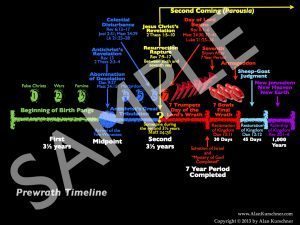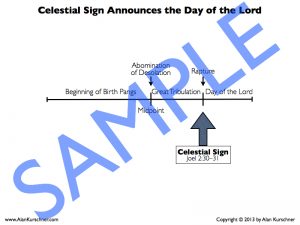
In 2 Thess 1, Paul encouraged the Thessalonian believers to persevere in adversity. He reassures them that these tribulations are not the eschatological day of the Lord’s judgment, and that God will deliver his people for rest and glorification at Christ’s revelation.
Continuing this topic of the eschatological judgment into 2 Thess 2, Paul gives additional reassurance to the Thessalonians that they are not experiencing the day of the Lord’s wrath. He does this through describing two prophesied events that must happen before the day of the Lord. In 2 Thess 1, Paul stressed that the day of the Lord WILL COME; in chapter 2, he stressed that the day of the Lord has NOT COME.
The false teachers in Thessalonica did not deny the teaching of a day of the Lord—they affirmed it. Their false teaching was persuading the Thessalonians that it had already begun. Since Paul had previously taught that the Thessalonians would be delivered from the Lord’s wrath (1 Thess 5:9), we can imagine their frightened state of mind, thinking they had been left for judgment. Paul must combat this false teaching immediately.
This same Thessalonian trepidation may recur when the Antichrist arrives. Many Christians who have been taught all of their lives that the Antichrist's great tribulation is the day of the Lord's wrath will think they are experiencing God's eschatological wrath. This will cause unnecessary despair if we do not correctly understand that Jesus will return to cut short the days of the Antichrist's great tribulation to rapture the church, and only then pour out his day of the Lord's wrath upon the world. The Thessalonian error will leave the faith of many Christians vulnerable.
![Antichrist Before the Day of the Lord: What Every Christian Needs to Know about the Return of Christ [Paperback]](https://www.alankurschner.com/wp-content/uploads/2013/11/Prewrath-3D-Cropped-e1406256638580-218x300.jpg)
![Prewrath: A Very Short Introduction to the Great Tribulation, Rapture, and Day of the Lord [Paperback]](https://www.alankurschner.com/wp-content/uploads/2015/08/Prewrath-very-short-introduction-cover-682x1024-200x300.jpg)