Podcast: Play in new window | Download | Embed
Antichrist Takes His Seat: Understanding the 2nd Thessalonians 2 Prophecy
Is the church destined to witness the arrival of the Antichrist? In this deep-dive session, we unpack one of the most pivotal and debated passages in all of biblical prophecy: 2nd Thessalonians 2:1-4. If you have ever felt confused by the timing of the Rapture, the “Day of the Lord,” or the “Abomination of Desolation,” this video provides the grammatical and historical clarity you need to understand the days ahead.
What is the “Day of the Lord”?
The Thessalonian believers were in a state of spiritual panic. They feared they had missed the Second Coming (Parousia) and were already enduring God’s final wrath. Paul writes this second epistle to correct their defective eschatology. He explains that the Day of the Lord is not a singular “snap of the fingers” moment, but an extended, complex event—much like Christ’s first coming encompassed His birth, ministry, death, and resurrection.
Why the Church Will See the Antichrist
Contrary to common pre-tribulational theories, the Apostle Paul provides explicit “temporal markers”—specific signs that must happen before the Day of the Lord begins. We explore the Greek term proton (meaning “first”), which acts as a divine gatekeeper for the end-times timeline.
According to Paul, two major events must occur first:
-
The Apostasy (Apostasia): A great falling away where professing Christians may capitulate to the global system.
-
The Revelation of the Man of Lawlessness: The Antichrist stepping onto the world stage and taking his seat in the Temple of God.
2nd Thessalonians 2:3: The Most Debated Verse in Prophecy
Breaking Down the “If-Then” Grammatical Structure
The debate over the Rapture often hinges on this single verse. We use grammatical parallels from the Gospel of John and the Gospel of Mark to show how Paul’s use of the “unless… first” construction makes it impossible for the Day of the Lord to start before the Antichrist is revealed.
-
John 7:51 Parallel: A man isn't condemned unless he is heard first.
-
Mark 3:27 Parallel: A house isn't plundered unless the strong man is tied up first.
By following this logic, the conclusion is clear: the Church is not experiencing God's wrath, but it is called to persevere through the revelation of the Man of Lawlessness.
Responding to Pre-Tribulational Objections
This session provides a respectful, academic, and scripturally-grounded response to the two most common objections to the Pre-Wrath view:
Objection 1: Are these events “within” the Day of the Lord?
Some argue that the apostasy and the Antichrist happen during the wrath, not before it. We demonstrate how the adverb protos (First) renders this interpretation incoherent. Paul’s goal was to reassure the believers that they had not missed the Day of the Lord because they hadn't seen the signs yet.
Objection 2: Is the “Apostasy” actually the Rapture?
We address the controversial claim that the Greek word Apostasia refers to a “physical departure” (the Rapture). By looking at the lexical history and the context of Paul’s writing, we uncover why this interpretation fails to hold up to linguistic scrutiny and why the traditional meaning of “rebellion” or “falling away” is the only one that fits the biblical narrative.
The Abomination of Desolation and the Mark of the Beast
What does it look like when the Antichrist “takes his seat in the Temple”? Drawing from Daniel 11:36 and the Olivet Discourse, we discuss the historical prototypes—like Antiochus Epiphanes—and what they signal for the future.
We also tackle the sober warnings of Revelation 14. Many are told that warnings regarding the Mark of the Beast aren't for the Church. However, this video explains why these warnings are real, concrete, and essential for the “Tribulation Saints” (the Church) who will be present during this era of testing.
What You Will Learn in This Video:
-
The Meaning of Parousia: Why the Second Coming is an arrival and a “continuing presence.”
-
The Goal of 2nd Thessalonians: How Paul provides comfort through chronological clarity.
-
Exegesis vs. Tradition: Why we must let the grammar of the Bible override inherited theological traditions.
-
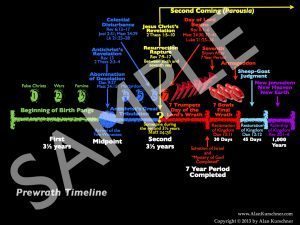
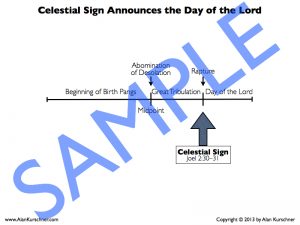
The Pre-Wrath Framework: A visual and scriptural walkthrough of the 70th Week of Daniel, the Midpoint, and the Great Tribulation.
Key Timestamps:
-
00:00 – Goals for the session: Explaining 2nd Thess 2:1-4.
-
05:44 – The definition of Parousia (The Arrival).
-
11:31 – The “If-Then” conditional statement of Verse 3.
-
15:00 – The relationship between the Apostasy and the Mark of the Beast.
-
20:16 – Responding to Pre-Tribulational Objection #1 (The “Within” Argument).
-
31:16 – Responding to Pre-Tribulational Objection #2 (The “Departure” Argument).
Don't be deceived by bad eschatology. Equip yourself with the Word of God and understand the signs of the times.

![Antichrist Before the Day of the Lord: What Every Christian Needs to Know about the Return of Christ [Paperback]](https://www.alankurschner.com/wp-content/uploads/2013/11/Prewrath-3D-Cropped-e1406256638580-218x300.jpg)
![Prewrath: A Very Short Introduction to the Great Tribulation, Rapture, and Day of the Lord [Paperback]](https://www.alankurschner.com/wp-content/uploads/2015/08/Prewrath-very-short-introduction-cover-682x1024-200x300.jpg)