Podcast: Play in new window | Download | Embed
The rapture debate was held on October 9, 1999 in Irving, Texas. About 600 were in attendance. The moderator was Kerby Anderson.
My commentary on the debate is below.
The following are the four parts of the debate with a rebuttal period after each one.
Part 1: Pretribulationism – Mal Couch and Yaacov Ramsel
Part 2: Prewrath – Charles Cooper and Roger Best
Part 3: Postribulationism – Ken Kline and Monte Judah
Part 4: Question & Answer
A few observations of the debate:
1. Mal Couch’s pretrib presentation was actually not a presentation at all. He made assertions about Matthew 24 but with no support to back them up except for an odd reference to Deuteronomy, an inconsistency that Roger Best pointed out later.
In addition, rather than Couch arguing for his position during his time to do so, he became fixated on personalities such as Robert Van Kampen and Marvin Rosenthal, a recourse that reveals his vacuous position.
2. After Charles Cooper gave his lucid prewrath presentation, it was time for the rebuttal from the others participants. Mal Couch was the first to respond. Would he respond biblically in his rebuttal period? Nope. He completely fell apart. In his very first remark, Couch engaged in a personal attack on Cooper saying something along the lines of “he would make a good salesman.”
If that wasn't bad enough, it gets worse for Couch.
Immediately after his ad hominem against Cooper, he began to respond in a conspicuous agitated-hostile manner. It was obvious that the success of Cooper’s prewrath presentation and the positive effect it had on the audience put Couch in this distressed posture.
At this point, in my opinion, the debate was over. But there was more.
3. In Part 3, toward the beginning of the post-trib presentation the speaker admitted that he is more prewrath than posttrib! Incidentally, this is why I really believe that many posttribs would become prewrath if they were shown a competent prewrath explanation.
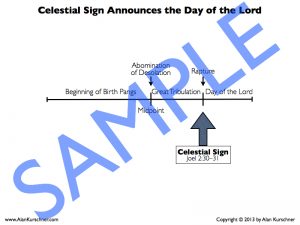
4. Next, in the post-trib rebuttal, Cooper pointed out some important inconsistencies within the postrib view concerning the sheep and goats judgment and their timing of the rapture. In addition, toward the end of this rebuttal Cooper corrected the pretrib Mal Couch on his errors by demonstrating that the day of the Lord’s wrath is announced by the sixth-seal cosmic disturbances.
5. After the debate was over, Mal Couch unhappily exited the building choosing not to take questions–and Charles Cooper and Roger Best received applause and a warm welcome after the debate with people gathering around them wanting to learn more about the prewrath position (including a post-trib participant!).
6. I am convinced that when the prewrath and pretrib position is examined side-by-side, or they are cross-examined in a public moderated debate, the prewrath will be shown to be the biblical position. This is why pretribs are recalcitrant to debate prewrathers in public. This debate was 15 years ago! I wish I could post some recent debate audio, but sadly that is not the case. We'll still waiting for pretrib teachers to take up our debate challenges, but all we have heard are crickets. This is a reason why pretribs are coming over to the prewrath camp in droves. They see who is willing to defend their position publicly. And those who are not willing.
I am not a big fan of multiple party debates, and though there was no formal cross-examination in this debate, I thought it went well given the amount of time with some important points that Cooper and Best made in support of key prewrath issues. In addition, I was pleased to listen to them demonstrate inconsistencies in the opposing views, in particular with the pretrib position.
I believe, however, that the most effective format for debate are two individuals with opposing views having time periods of an opening, rebuttals, cross-examination, and closing. Just to emphasize, you cannot have a real debate without cross-examination; it is the soul of the debate. Otherwise, all you will really have are two monologues, not a dialogue. Further, the moderator is very important to a debate in managing and enforcing the protocol.
I believe debate would be beneficial for God’s people since two theological positions are held accountable; i.e., assumptions and false claims cannot go unchallenged as they often do in print. And most of all, God is glorified in this effective manner of communication of seeking biblical truth.
“The first to state his case seems right, until his opponent begins to cross-examine him.” Proverbs 18:17
Rapture Debate – Three Views Compared: Pretrib, Prewrath, Posttrib
In this panel discussion and debate, you’ll hear three major evangelical views on the timing of the rapture laid out side-by-side: Pretribulation (rapture before the Tribulation), Prewrath (rapture after Antichrist’s persecution begins but before God’s wrath), and Posttribulation (rapture after the Tribulation in connection with Christ’s visible return). While the speakers strongly disagree on timing, they repeatedly affirm key common ground: the Bible is God’s Word, Jesus Christ is returning, the rapture is real, and God will establish His kingdom.
This isn’t a quick summary or a one-sided lecture. It’s a live, moderated event with presentations, rebuttals, and audience questions—so you can hear how each position argues from Scripture and how the other views respond in real time. If you’ve ever wondered why sincere Bible-believing Christians end up with different rapture timelines, this debate helps you pinpoint the interpretive “pressure points” where the views diverge.
What You’ll Learn in This Rapture Debate
As you watch, expect a fast-moving exchange focused on the passages that dominate the rapture discussion:
- Matthew 24 (Olivet Discourse): Is it primarily about Israel, the Church, or both? Is “one taken, one left” the rapture or judgment?
- The Day of the Lord: When does it begin? Is it identical to “tribulation,” or is God’s wrath distinct from Satan’s persecution?
- 1 Thessalonians 4–5: The classic rapture text (shout, archangel, trumpet, resurrection). What does “thief in the night” mean, and who is the “they” vs. the “you”?
- 2 Thessalonians 2: Does Paul place certain events (apostasy/man of lawlessness) before “the Day of the Lord” and Christ’s coming?
- Revelation 6–7, 12–13, 19–20: Seals and wrath language, Satan’s fury, Antichrist persecution, resurrection, and the Millennium.
- Daniel’s 70th Week: How does Daniel 9 shape the end-times timeline, and how does it relate to Israel and the Church?
You’ll also hear discussion of the 24 elders, the 144,000, the two witnesses, the sheep and goats judgment, and how prophetic patterns and biblical vocabulary (Greek and Hebrew terms) factor into interpretation.
Pretrib View – Key Emphases
The pretrib presenters stress context—especially in Matthew 24—arguing the disciples are asking Jewish/Messianic questions about the Temple, Israel’s future, and the Messiah’s kingdom, not “church questions” about a rapture mystery later unfolded in the New Testament letters. A central claim is that Matthew 24 focuses on Israel’s end-time distress and Christ’s visible return to reign, not the Church’s catching away. The pretrib side also pushes the importance of separating what pertains to Israel from what pertains to the Church, warning against blending categories and creating confusion.
Prewrath View – Key Emphases
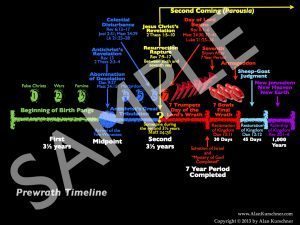
The prewrath presenters argue that Scripture sets two boundaries: believers are not appointed to God’s wrath, but they may experience severe tribulation/persecution from Satan and Antichrist before deliverance. This view highlights texts like 1 Thessalonians 1:10 and 5:9 (rescued from wrath), Revelation 12 (Satan’s intensified rage), and 2 Thessalonians 2 (events preceding the Day of the Lord). A key debate point is when the Day of the Lord begins and how Revelation’s seal judgments relate to wrath.
Posttrib View – Key Emphases
The posttrib presenters emphasize the repeated biblical language of “gathering” the elect and connect the rapture closely to the resurrection and Christ’s visible return. They argue that Matthew 24:29–31 (“immediately after the tribulation…He will gather His elect”) aligns with 1 Thessalonians 4 (trumpet, resurrection, catching up) and 1 Corinthians 15 (“at the last trumpet”). This segment also explores how end-time fulfillment may relate to the biblical festivals (Trumpets, Atonement, Tabernacles), and whether Scripture supports imminence (“any-moment”) or a discernible season.
Why This Video Matters
This debate helps you see what’s really at stake beneath the charts and labels:
- How to interpret Matthew 24 in its context
- How to define “wrath,” “tribulation,” and “Day of the Lord” biblically
- How Revelation’s sequence and language should be read
- How Israel and the Church relate in prophecy
Scriptures Discussed
Matthew 24; Mark 13; Luke 21; 1 Thessalonians 4–5; 2 Thessalonians 2; 1 Corinthians 15; Daniel 9 & 12; Jeremiah 30; Joel 2; Zephaniah 1; Isaiah 26, 40, 65; Revelation 6–7, 10, 12–13, 19–20.
Join the Discussion
Which view do you find most persuasive—Pretrib, Prewrath, or Posttrib—and what is the single strongest passage shaping your position? Drop your thoughts in the comments. If this helped you, please like, subscribe, and share with someone studying the rapture debate.

![Antichrist Before the Day of the Lord: What Every Christian Needs to Know about the Return of Christ [Paperback]](https://www.alankurschner.com/wp-content/uploads/2013/11/Prewrath-3D-Cropped-e1406256638580-218x300.jpg)
![Prewrath: A Very Short Introduction to the Great Tribulation, Rapture, and Day of the Lord [Paperback]](https://www.alankurschner.com/wp-content/uploads/2015/08/Prewrath-very-short-introduction-cover-682x1024-200x300.jpg)